2025-2026 Edition
Import Your Own JDM Vehicle.
Save Thousands.
Everything you need to know to import a Japanese vehicle into the U.S. yourself — no dealer markup, no guessing at paperwork, no $15k for a $5k truck.
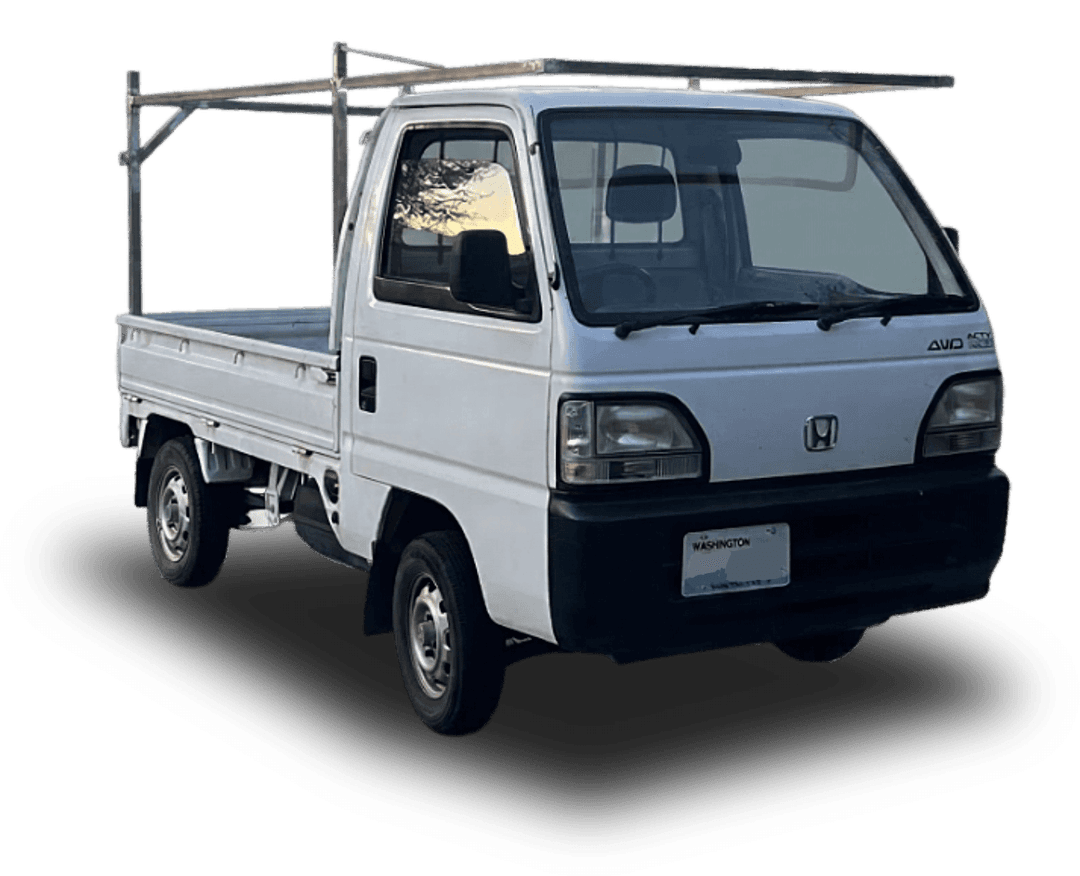
Everything you need to know to import a Japanese vehicle into the U.S. yourself — no dealer markup, no guessing at paperwork, no $15k for a $5k truck.
Dealers in the U.S. charge $12,000–$25,000 for a used kei truck from Japan. The same truck, imported yourself, costs a fraction of that. These are real numbers from an actual import — not a hypothetical:
A 1997 Honda Acty 4WD with A/C, imported through the Port of Tacoma. That's a $10,000+ gap between doing it yourself and paying someone else to do it for you.
The import process is honestly pretty straightforward — if you know the rules. The problem is that the rules are scattered across a dozen government websites, old forum posts, and hard-won experience. Most people who lose money make one of these mistakes:
Every one of these is preventable. The guide breaks down exactly what causes them, how to avoid them, and what to do if you're already in trouble.
This isn't a fluffy ebook. It's the stuff you actually need — the guide, the calculator, the templates — so you're not spending 40 hours piecing it together from forums and government PDFs.
14 chapters covering common failures, the 25-year rule, finding vehicles, payment, shipping, customs clearance, port pickup, state registration, insurance, and real cost breakdowns. Includes a detailed Port of Tacoma field guide and state-by-state legality reference.
Plug in your vehicle price, port, and duty class. It tells you exactly what you'll pay, all-in, and shows you what a dealer would charge for the same truck. Change a number and everything recalculates.
Most dealers communicate over WhatsApp. These are five copy-paste messages for the key moments: initial inquiry, inspection request, USDA compliance, payment checklist, and post-shipment follow-up.
Six-phase checklist covering research through registration. Every step, every document, every deadline — nothing falls through the cracks.
Seven real-world mistakes that cost importers thousands. Each one explained: what happens, why it happens, and exactly how to prevent it.
If the vehicle is under $2,500, you can file the customs paperwork yourself — the guide walks you through every field. Above $2,500, honestly, just use a broker. It's $150–$400 and saves you from the most stressful part of the whole process.
Any vehicle manufactured 25+ years ago is exempt from federal safety standards. This includes kei trucks and vans (Honda Acty, Suzuki Carry, Daihatsu Hijet), JDM sports cars (Skyline GT-R, Supra, RX-7), and unique vehicles like the Suzuki Jimny and Nissan Figaro. As of 2026, vehicles built in 2000 or earlier are becoming eligible.
Depends on your state. Washington, Texas, Arizona, Idaho, and many others allow full road registration. Some states restrict speed or road type. A few (California, New York) effectively ban them. The guide includes a state-by-state reference current as of early 2026.
Plan for 6–10 weeks from purchase to pickup. Shipping from Japan to the West Coast is 2–3 weeks. East Coast ports take 4–7 weeks. The 60-day action plan in the guide maps out exactly what to do each week.
Yes. The 25-year exemption from FMVSS/NHTSA safety standards and the 21-year EPA emissions exemption are established federal law. Thousands of vehicles are legally imported this way every year.
No catch. All of this information is publicly available — it's just scattered across CBP.gov, NHTSA.gov, old WordPress blogs, and forum threads from 2019. The guide just puts it all in one place, in the right order, so you can actually act on it.
The guide, the calculator, the templates, the checklist. Everything you need to go from "I want one of those" to plates on the truck.